Quick answer
Your first year with a pool comes down to rhythm, not magic products. Test twice a week, keep free chlorine between 1 and 3 ppm, hold pH in the 7.2-7.6 range, and brush the walls even when the water looks fine. Skip the five-bottle chemical dump the first time something looks off. Fix one number at a time, retest, and let the filter do the heavy lifting.
Who this is for
New homeowners with a pool, people who just fired the weekly service, and anyone who can handle a brush and a test strip but freezes at the big-box chemical wall. If you don’t know what CYA is or why your pH keeps climbing, this is your starting point.
What this is not
This is not a buying guide. If you want to know which test kit to buy, that lives in our pool test strips guide. This guide covers what to do each week, not what to purchase. It also isn’t a chemistry textbook. You don’t need to understand mole fractions to keep a pool blue. You need to test, dose based on the label, and retest.
Decision tree: what kind of pool do you have?
Your care routine depends on three things: pool type, sanitizer, and climate.
Chlorine pool vs saltwater
Most backyard pools run on chlorine. If you have a salt chlorine generator (SWG), your daily routine is similar, but you’ll check the cell every few months and clean it with a mild acid solution when calcium builds up. Saltwater pools still need shock, still need balanced pH and alkalinity, and still need brushing. Don’t let anyone tell you salt pools are “maintenance free.”
Above-ground vs inground
Above-ground pools have smaller volumes, which means dosing mistakes hit harder. A 10,000-gallon above-ground pool reacts to 1 lb of shock faster than a 25,000-gallon inground pool. Always check your volume before adding chemicals. Use the chemical dose calculator if you’re not sure how much to add. Above-ground dosing hits harder than a copied inground label — see above-ground pool care differences before you treat a vinyl-wall pool like a 25,000-gallon hole.
Warm climate vs cold
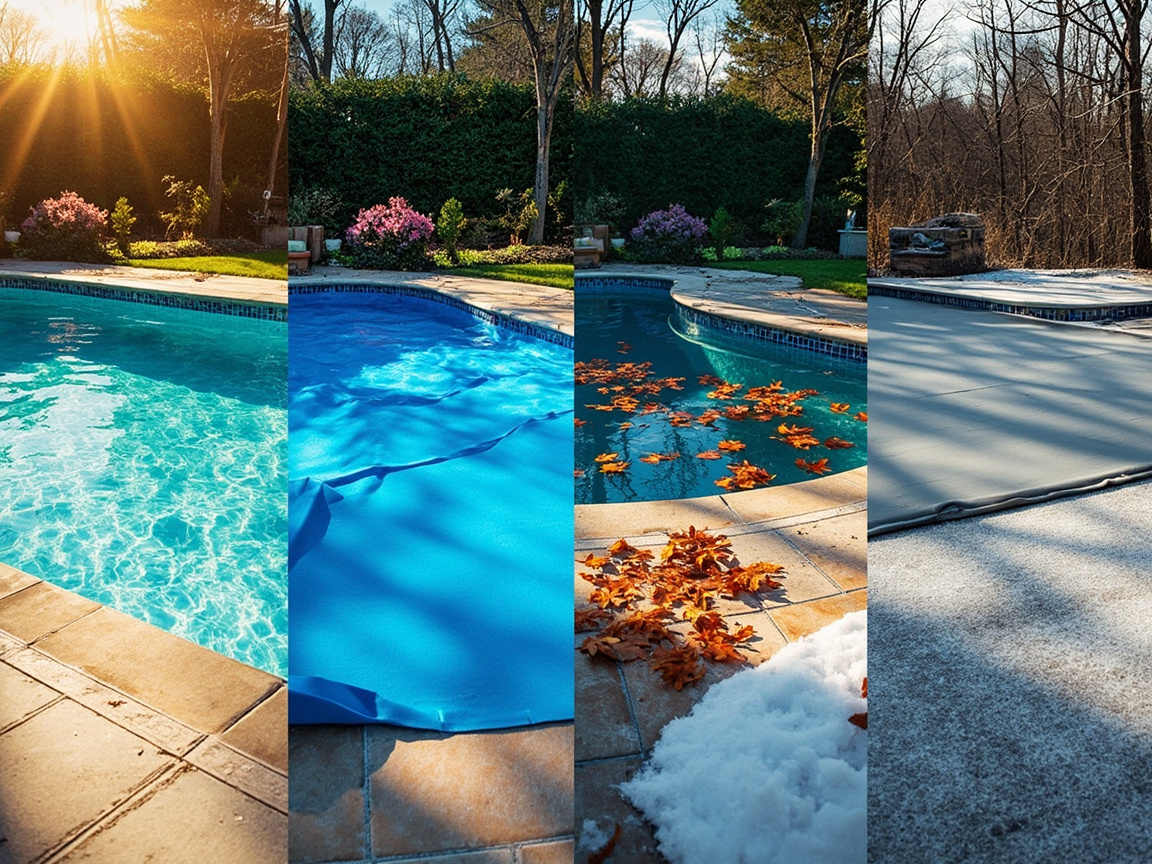
If you live somewhere with year-round pool weather, you’ll test more often and use more chlorine year-round. If you close your pool for winter, the opening and closing process matters as much as summer maintenance. See opening a pool and winterizing when those weeks hit; the seasonal section below is the short version.
Clear water vs already green
If the water is still clear, stay on the weekly rhythm below. If it’s cloudy or green, stop guessing and follow the green pool fix sequence or the cloudy pool sequence before you invent a new chemical cocktail. Clear water and green water are different jobs.
Heavy bather load vs quiet backyard
After a party or a long weekend of swimming, free chlorine can crash overnight. Test the morning after heavy use, and plan a shock dose at dusk if free chlorine is near zero. Quiet pools still need brushing — algae does not care that nobody swam.
Your first 7 days
If you just moved into a house with a pool, here’s what to do this week:
Day 1-2: Find your numbers
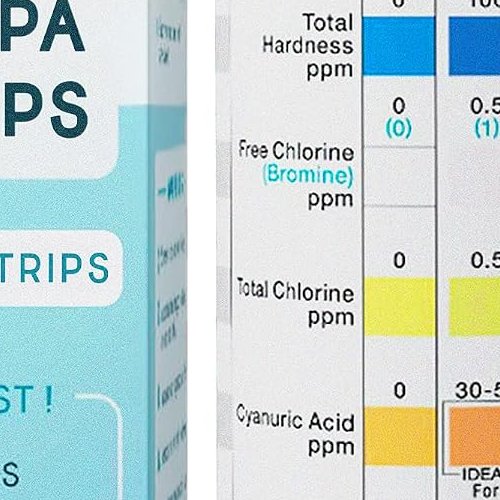
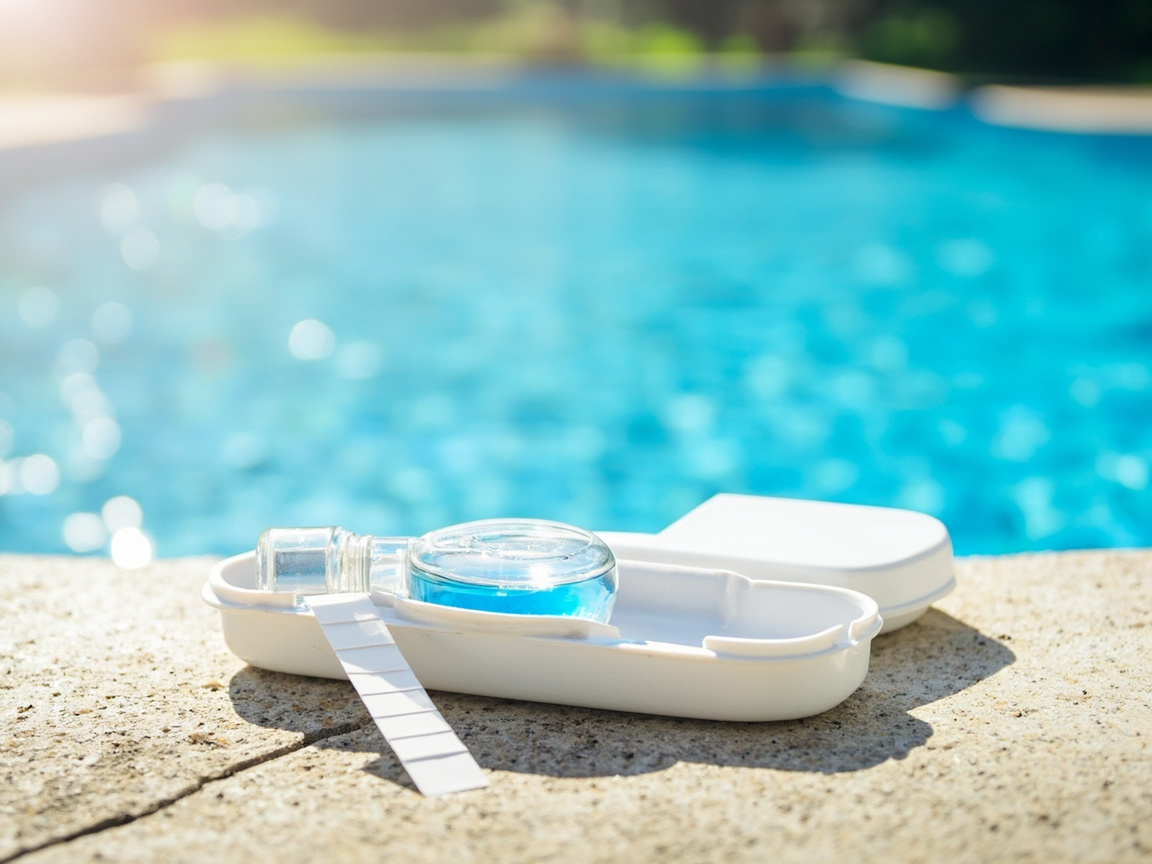
Test free chlorine, pH, total alkalinity, and cyanuric acid (CYA). If you don’t have a kit that reads all four, 7-in-1 test strips will get you close enough to start. Write the numbers down. Don’t add anything yet.
Day 3: Fix alkalinity first
Total alkalinity is the buffer that keeps pH from bouncing. If TA is below 80 ppm, add sodium bicarbonate (baking soda works, the pool version is the same thing). If TA is above 120 ppm, add muriatic acid or sodium bisulfate. Wait 30 minutes with the pump running before retesting with your test strips.
Day 4: Adjust pH
Once TA is in the 80-120 ppm range, adjust pH. If pH is above 7.8, add muriatic acid. If it’s below 7.2, add sodium carbonate (soda ash). Retest after 30 minutes of circulation.
Day 5-6: Address chlorine
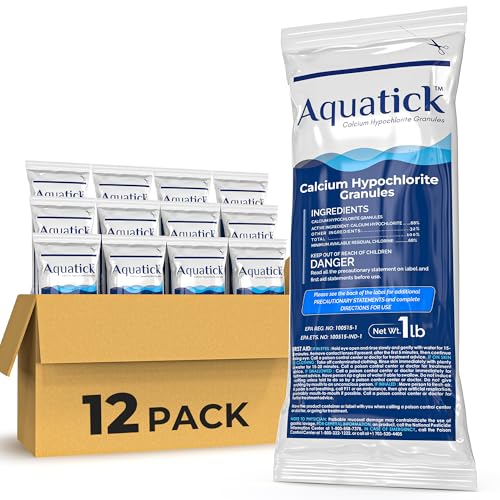
If free chlorine is near zero, you need to shock. Add calcium hypochlorite shock at dusk, 1 lb per 10,000 gallons. Run the pump overnight. Don’t swim until free chlorine reads 1-3 ppm the next morning. If the water is green or you suspect algae, follow the green pool fix roadmap instead.
Day 7: Brush and vacuum
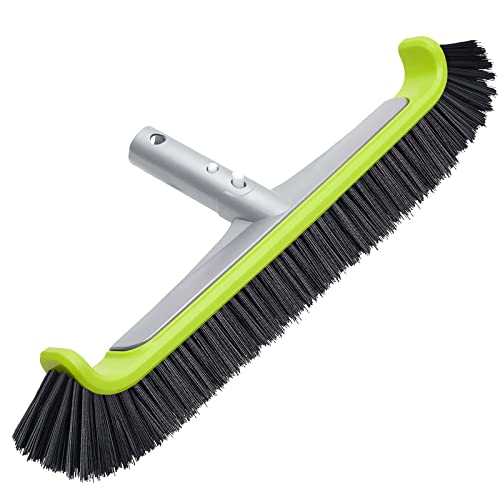
Brush the walls, steps, and floor even if they look clean. Algae starts as a film you can’t see. Use a 17.5-inch pool brush that fits a standard telepole. Vacuum what settles. Check the filter pressure and backwash if it’s 8-10 psi above the clean baseline.
Weekly rhythm
Once your first week settles in, here’s the routine that keeps the water clear without eating your weekend:
- Test free chlorine and pH 2-3 times per week in summer. Once a week is fine in cooler months. For the full cadence, see the weekly pool care checklist.
- Skim and empty baskets daily or every other day. Leaves decompose and feed algae.
- Brush walls and floor once a week minimum with a nylon pool brush. More if the pool sits unused or after a storm.
- Check filter pressure weekly. Backwash when pressure rises 8-10 psi above the clean reading.
- Note weather and usage: storms, parties, and high temperatures are the usual suspects when water goes south.
- Check chlorine demand: if free chlorine keeps dropping to zero between tests, your CYA may be too low or your pool is getting more sun than you think. Add stabilizer if CYA is below 30 ppm.
Chemical addition order
When you need to adjust multiple things, follow this order:
- Total alkalinity first — it’s the foundation. Fix it, wait 30 minutes.
- pH second — it depends on TA being stable. Wait 30 minutes after adjusting. Details in the pH guide.
- Chlorine last — add sanitizer after the water is balanced. Shock at dusk.
Adding chlorine before balancing pH wastes it. High pH makes chlorine less effective. Low pH can damage your pool surface and equipment. Get the order right and you’ll spend less on chemicals.
Monthly checks
- Test CYA (cyanuric acid): CYA protects chlorine from sunlight. Too low (below 30 ppm) and chlorine burns off fast. Too high (above 50 ppm for chlorine pools, 80 for saltwater) and chlorine becomes less effective. Test once a month or after heavy dilution. Deeper dive: cyanuric acid and total alkalinity.
- Clean the skimmer and pump baskets: Check for cracks, check the O-ring lubrication.
- Inspect the filter: For sand filters, backwash monthly even if pressure looks fine. For cartridge filters, hose off the element monthly and deep-clean every 3-4 months.
- Check calcium hardness: Once a month, test calcium hardness. Too low (below 200 ppm) can corrode surfaces. Too high (above 400 ppm) causes scaling. Adjust slowly.
- Inspect the pump and heater: Listen for unusual noises, check for leaks around the pump housing, and make sure the pressure gauge isn’t stuck. A failing pump seal starts as a small drip you can catch early.
Seasonal peaks
Summer (peak season)
Test more often, run the filter longer (10-12 hours), and keep chlorine toward the higher end of the range. Heat and sunlight burn through chlorine faster. If CYA is low, chlorine won’t last the day. Plan for higher chlorine demand when water temps climb above 80 degrees. Algae loves warm, stagnant water.
Peak season is a longer version of the weekly rhythm, not a new chemistry. For the year-round cadence behind this bump, use the year-round pool maintenance schedule. If you plan by month instead of by season, the month-by-month pool calendar maps the same jobs onto a calendar.
Opening (spring)
If you closed the pool for winter, opening day is the heaviest single-task day of the year. Remove the cover, clean it, refill to the skimmer line, and test everything. Plan to shock on day one and run the filter 24/7 for the first 48 hours.
Don’t improvise opening from this short peak note. Follow how to open a pool for spring for the full sequence. This section is the first-year reminder that opening is a job on the calendar, not the procedure itself.
Closing (fall)
Balance the water before closing. Lower the water level below the skimmer, blow out the lines with a compressor or shop vac, add winterizing chemicals (polyquat algaecide and a chlorine floater), and put the cover on clean. A poor close means a harder open the following spring, and you’ll spend the first warm weekend fighting algae instead of swimming.
The full close lives in how to winterize a pool. The weeks before you blow out lines are fall pool care before winter — shoulder-season chemistry so you aren’t closing a green pool. A sloppy close is a spring algae bill.
Safety notes (read this)
- Never mix different chlorine products dry or in a bucket. Cal-hypo and trichlor can react violently.
- Never pour shock through a skimmer that feeds an automatic chlorinator. The concentrated chemical can cause a dangerous reaction inside the equipment.
- Add chemical to water, not water to chemical when pre-dissolving. This prevents splashing concentrated acid or chlorine.
- Wear gloves and eye protection when handling muriatic acid or cal-hypo. Don’t breathe dust from shock containers.
- Store chemicals locked away from kids and pets, in a dry, ventilated area. Don’t stack different chemicals on top of each other.
What you’ll need
Three things cover 80% of first-year pool care:
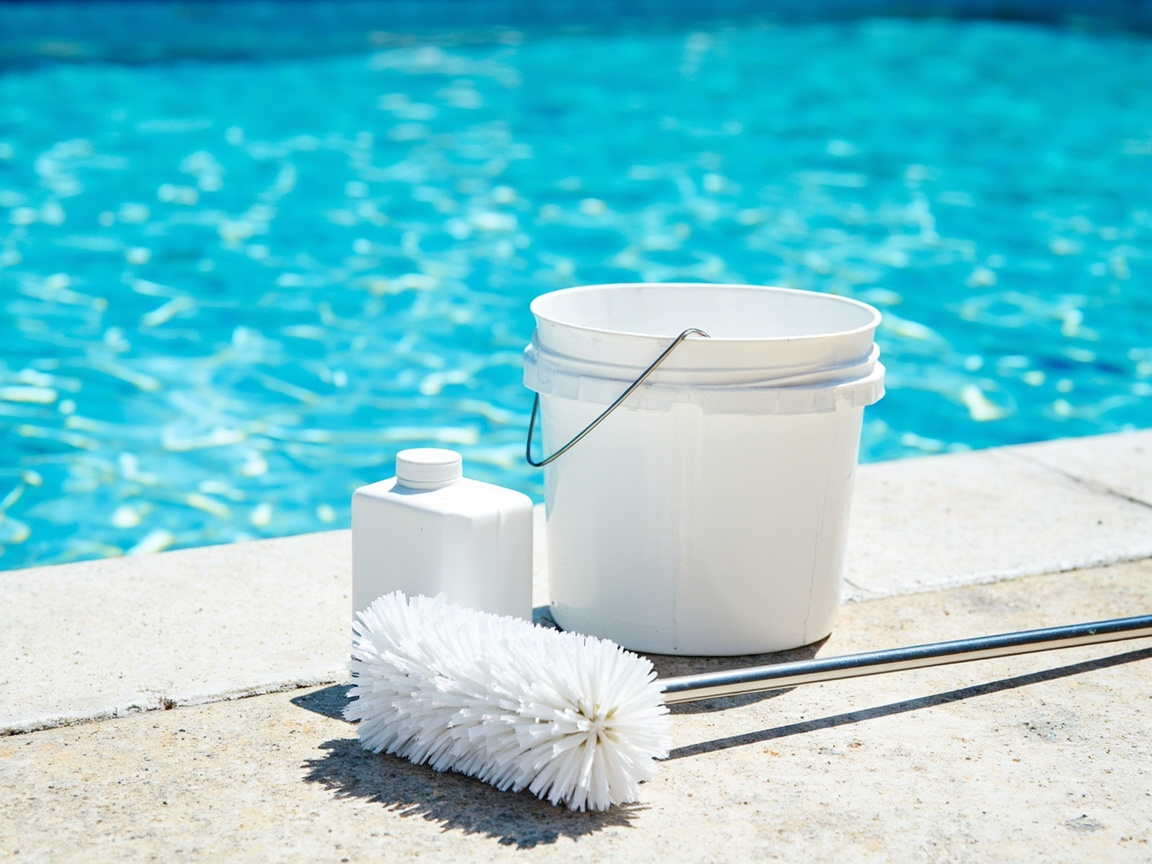
Starter kit: strips, shock, and brush
- Test strips or a liquid kit — 7-in-1 test strips give you free chlorine, pH, TA, and CYA in under a minute. Liquid kits are more precise but slower.
- Pool shock — calcium hypochlorite at 1 lb per 10,000 gallons for routine shocking or algae emergencies.
- A pool brush — a 17.5-inch nylon brush that fits a standard telepole. Brushing is free chemistry — it disrupts algae before it takes hold.
What to buy only if needed
If your test kit doesn’t read CYA, you need one that does. Cheap strips that only test pH and chlorine won’t cut it for a first-year owner. If you have a saltwater pool, a separate salt test or a digital salt meter is worth the money. Don’t buy a robot cleaner, a heater, or a fancy control system before you can test your water and clear a green pool on your own.
Start with the pool test strips buying guide if you still need a kit.
Common mistakes new owners make
- Adding five products the same afternoon without retesting. Each chemical shifts the balance. You can’t fix what you can’t measure.
- Know gallons before the second bottle. A 10,000-gallon above-ground pool is not a 25,000-gallon inground hole — 1 lb of calcium hypochlorite shock is a different job in each. If volume is a guess, stop and use the chemical dose calculator before you stack products.
- Retest after each product. TA, then pH, then chlorine. Five labels the same afternoon is how you overshoot and start chasing numbers.
- Ignoring total alkalinity while chasing pH forever. Low TA makes pH bounce; high TA makes pH lock. Fix TA first.
- Running the filter “a couple of hours” in July. Warm water grows algae fast. Run 8-12 hours minimum in peak season.
- Watch filter pressure, not just the clock. When pressure sits 8-10 psi above the clean baseline, backwash a sand filter or rinse the cartridge. Skipping backwash in July is how a short run does nothing — the filter is packed.
- After a storm or a party, extend the run. Debris plus heat is the usual first-year algae surprise. This is filter neglect, not a new numbered mistake.
- Pouring shock through a skimmer that feeds a chlorinator. This is a safety hazard, not just a mistake.
- Buying a robot cleaner before owning a test kit. A clean pool starts with balanced water, not a fancy machine. Own test strips first, buy second.
When to call a pro
Keep DIY if: numbers move the right way after you brush, filter, and dose carefully. If free chlorine holds at 1-3 ppm, pH stays in 7.2-7.6, and the water is clear, you’re doing fine.
Call a pro if:
- The pump won’t prime or you suspect electrical issues
- Persistent black algae after a correct high-chlorine effort
- Structural leak or large water loss you can’t locate
- You’re not comfortable handling muriatic acid
Related
- How to clear a green pool — what to do when the water turns green
- Pool water testing guide — what to measure and in what order
- Chemical dose calculator — figure out how much to add based on your pool volume
Key takeaways
- Test before you dose. Always, every single time.
- Fix total alkalinity first, then pH, then chlorine. The order matters.
- Run the filter 8-12 hours in summer. Brushing is free chemistry.
- Don’t buy gear before you can test your water.
- One fix at a time, retest, wait. Patience beats dumping bottles.